

Written by: Soha albaghdadi
American media reports have confirmed that protests are no longer limited to major cities, but have expanded to universities and educational institutes. Students have organized demonstrations and sit-ins both inside and outside university campuses, rejecting cooperation between some universities and immigration authorities, and protesting the arrests of students and academics over their political positions.
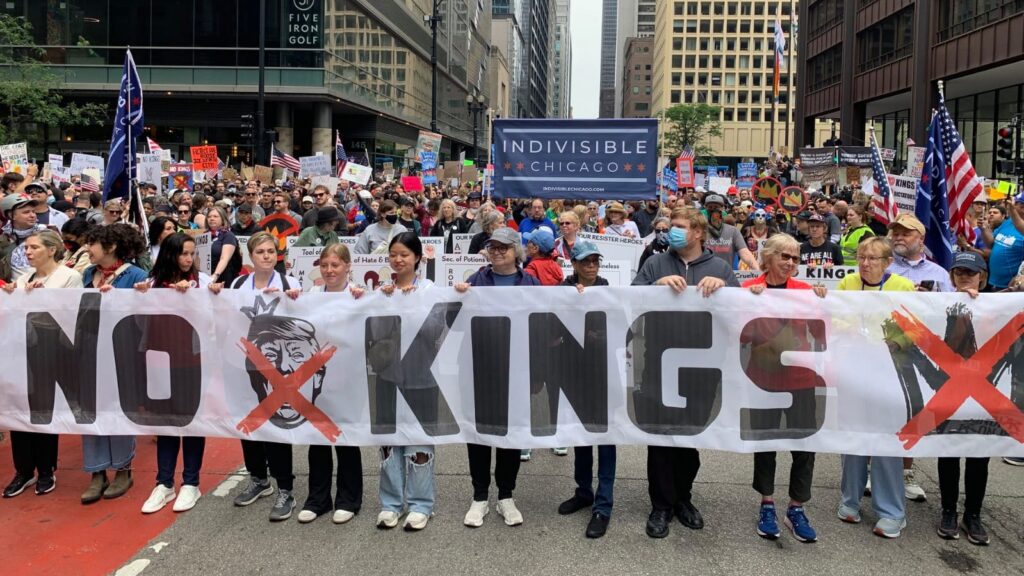
The “No Kings” Movement in Chicago
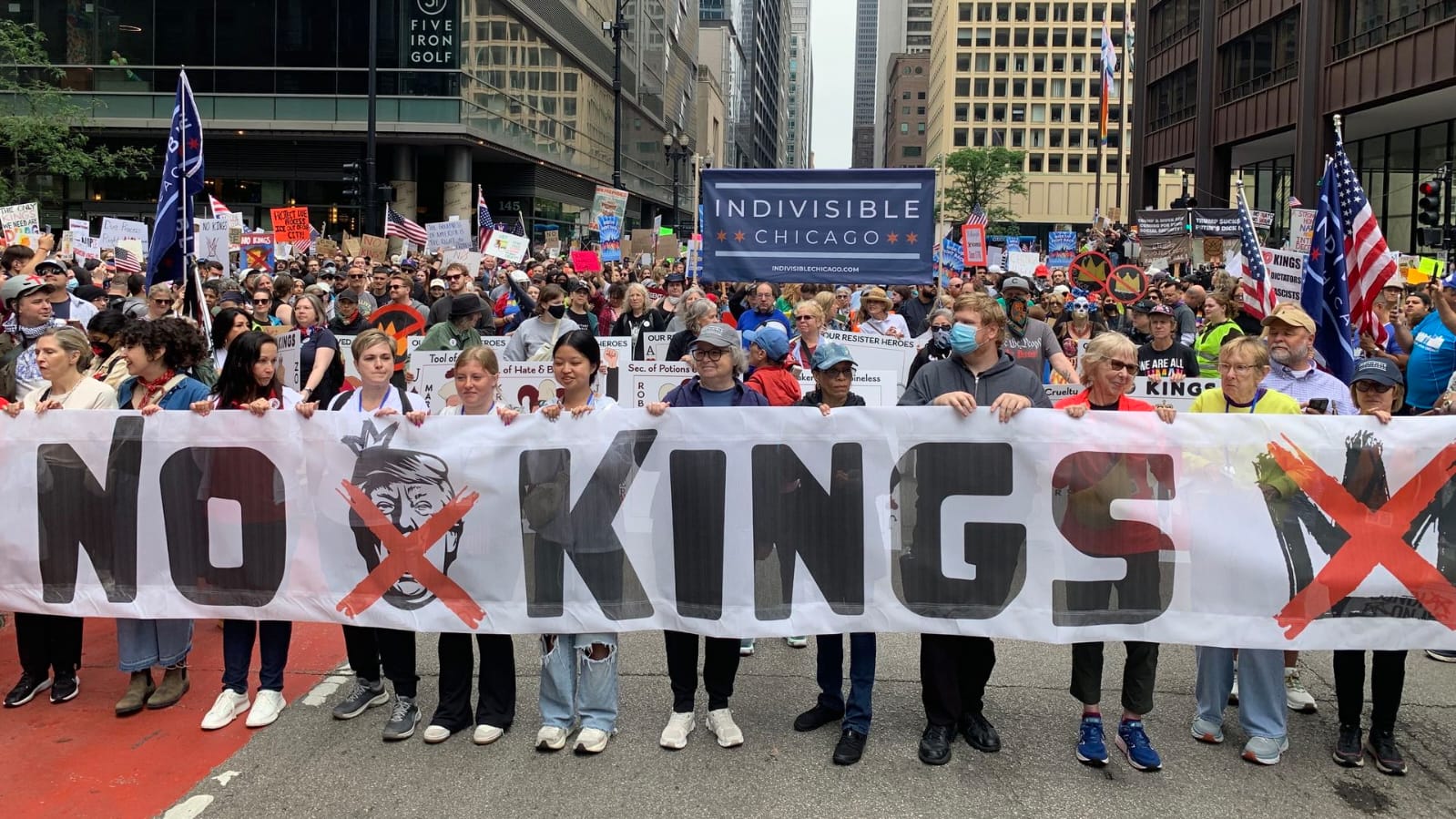
In the suburbs of Chicago, a large demonstration was organized under the slogan “No Kings” in front of a migrant detention center. Protesters demanded an end to immigration raids and what they described as the “authoritarian tendencies” of the Trump administration, with expectations of thousands of participants as part of a growing nationwide movement against coercive immigration policies.
University Students Confront Immigration and Customs Enforcement (ICE)
Escalation of Violence and Physical Injuries
The Associated Press reported that student protests have seen direct confrontations with federal agents, with several students suffering serious injuries during the dispersal of demonstrations. Among the most notable incidents was a case in California in which a university student lost vision in one eye after being struck by a projectile fired by a federal officer during a protest outside an immigration-related facility.
According to the agency, the incident has become a symbol of escalating security violence against the student movement and has sparked widespread outrage across American universities.
Advocacy for Sanctuary Campuses
Students at the University of South Florida also organized protests against any institutional ties between universities and immigration authorities, calling for an end to academic and security cooperation with ICE and an immediate halt to the targeting of migrant students on campus.
The U.S. Judiciary Enters the Crisis
Federal Court Ruling on Academic Freedom
In a significant development, a U.S. federal court issued a ruling protecting non-American academics and students from forced deportation, following direct accusations against the Trump administration of violating freedom of expression and targeting academics for their pro-Palestinian political views.
Constitutional Challenges to Administration Policy
The court described the administration’s actions as “unconstitutional authoritarian behavior,” affirming that deportation policies have become a tool to suppress political activism on university campuses—an interpretation widely seen by observers as direct legal backing for the student movement.
Political and Official Anger Across U.S. States
Legislative Hearings in Minnesota
In Minnesota, Democratic officials held public oversight hearings in which they accused the Trump administration and ICE of spreading “fear and community terror” through raids and arrests, and of using violence against civilians and students. They called for an immediate halt to ICE operations and for independent investigations into alleged violations.
Local officials stressed that such policies threaten the constitutional rights of all Americans, not only immigrants.
Core Slogans and Demands of the Student Movement
University students and protesters across various states have raised several key demands, most notably:
- Political Accountability: The removal and prosecution of Donald Trump over repressive policies.
- Campus Autonomy: The expulsion of ICE from university campuses and a termination of security cooperation.
- Deportation Relief: An end to forced deportations of migrants and foreign students.
- Civil Rights: Protection of freedom of expression and launching independent investigations into violations committed by immigration officers.
Conclusion: A Turning Point for Internal Stability
The American scene in January 2026 is heading toward open escalation, led by youth and university students in direct confrontation with the Trump administration and immigration authorities, amid partial judicial support and growing internal political anger.
Analysts believe that students joining the popular movement represents a dangerous turning point in the crisis, potentially transforming it from issue-based protests into an organized mass political movement that threatens internal stability and places the Trump administration before its most serious domestic challenge since its return to the political scene.
Leave a Reply