
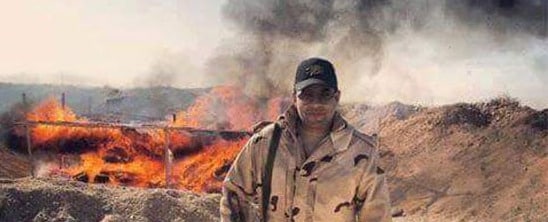

Explore the legacy of Mohamed Haroun, the “Lion of Sinai,” a pivotal figure in Egypt’s counterterrorism efforts. This profile details his elite military leadership during the North Sinai conflict, his bravery in Sheikh Zuweid, and his role in Middle East security. Discover how his sacrifice remains a cornerstone of the Global War on Terror and Egyptian patriotism.
By Soha Alaghdadi

Picture: Mohamed Ahmed Haroun
In the modern history of Egypt’s fight against terrorism, the name Mohamed Ahmed Haroun stands out as a symbol of courage, sacrifice, and duty. Known among his colleagues and in Egyptian media as the “Lion of Sinai,” Lieutenant Colonel Mohamed Haroun was one of the Egyptian Armed Forces’ most respected officers during the peak of counterterrorism operations in North Sinai. He was killed in the line of duty in 2015, during military operations aimed at confronting extremist groups in the city of Sheikh Zuweid.
The Foundation of a Hero: Early Life and Military Values in Beni Suef
Mohamed Haroun was born in Beni Suef Governorate, southern Egypt, into a family known for its strong sense of patriotism and public service. From an early age, he was described by those close to him as disciplined, calm, and deeply committed to serving his country. These qualities later shaped his military career and earned him the trust of his commanders and the respect of his fellow officers.
His upbringing in southern Egypt provided him with a grounded perspective on the importance of national stability. In the Egyptian military tradition, officers from the Nile Valley often bring a stoic resolve to their service, a trait Haroun exemplified throughout his training and eventual deployment to the front lines. This commitment to duty was not merely a career choice but a lifelong philosophy rooted in the values of his community.
International Security Challenges: Confronting Extremism in North Sinai
As Egypt faced a wave of violent attacks carried out by armed extremist groups in North Sinai after 2013, Mohamed Haroun was deployed to one of the most dangerous security theaters in the country. North Sinai, particularly Sheikh Zuweid and Rafah, became focal points of clashes between Egyptian security forces and militant groups affiliated with extremist ideologies. These groups targeted military checkpoints, civilians, and infrastructure in an attempt to undermine state authority and destabilize the region.
The conflict in North Sinai was not just a domestic issue; it was a critical front in the global war on terror. The presence of groups pledging allegiance to international extremist networks made the region a point of intense interest for global security analysts. For Haroun, the mission was clear: to prevent the spread of chaos and protect the sovereignty of the Egyptian state against an unconventional and ruthless enemy.
Elite Military Leadership: Why They Called Him the “Lion of Sinai”
Haroun quickly gained a reputation for bravery and professionalism. He was known for leading from the front, often volunteering for high-risk missions and refusing to remain behind operational lines. Fellow soldiers recalled that he believed strongly in morale and personal example, insisting that leadership meant sharing the same dangers as his men. This approach earned him the nickname “Lion of Sinai,” reflecting both his courage and his determination in confronting militant groups operating in the area.
In the world of special operations and counter-insurgency, the “lead by example” mantra is often cited but rarely lived as purely as it was by Haroun. His presence on the front lines was a psychological force multiplier, boosting the confidence of younger soldiers who saw their commander facing the same risks they were. His tactical acumen allowed him to navigate the complex, asymmetrical urban warfare that defined the battles in Sheikh Zuweid.
The Strategic Importance of Sheikh Zuweid and Rafah
The geography of Haroun’s service—Sheikh Zuweid and Rafah—represents some of the most difficult terrain for modern militaries. These areas are characterized by a mix of urban density and rugged desert, providing ample hiding spots for insurgent groups. The “Lion of Sinai” spent his final years mastering this landscape, ensuring that the Egyptian state maintained its presence despite the constant threat of improvised explosive devices (IEDs) and sniper fire.
By securing these corridors, Haroun and his peers were doing more than defending a border; they were ensuring that the Suez Canal and other vital international trade routes remained insulated from the instability plaguing the broader region. His work had a direct impact on Mediterranean security and the stability of the Middle East at large.
The Ultimate Sacrifice: The 2015 Operations
The year 2015 marked a turning point in the intensity of the conflict. Haroun was at the heart of these efforts, orchestrating defenses against large-scale coordinated attacks. It was during one of these high-stakes engagements in Sheikh Zuweid that he made the ultimate sacrifice. His death sent shockwaves through the military community, but rather than breaking morale, it served as a rallying cry for his subordinates to finish the mission he had started.
Legacy and Recognition in the Global War on Terror
Today, Mohamed Haroun is remembered not just as a fallen soldier, but as a national icon of the “Third Republic” of Egypt. His story is taught to new recruits as the gold standard of military ethics and tactical bravery. Internationally, his career serves as a case study in how dedicated professional officers can stem the tide of radicalization through persistent presence and personal bravery.
The “Lion of Sinai” remains a symbol of the heavy price paid for peace. As the region continues to move toward a more stable future, the foundations laid by officers like Haroun remain the bedrock of that security. His name is etched in the halls of Egyptian military history, a reminder that the cost of freedom is often borne by those willing to stand in the most dangerous places.
Leave a Reply